

On November 21, 2025, MTL au Sommet de la Nuit turned the SAT into a daytime headquarters for everything that makes up Montréal’s nightlife. For this fifth edition, MTL 24/24 set itself a clear mission: use the first year of implementation of the City’s Nightlife Policy to bring together the people who make, govern and experience the night. The goal wasn’t simply to present a program of panels, but to build a shared understanding of Montréal’s nighttime ecosystem—its pressures, its potential, and its path forward.
The day opened with a conversation on placemaking and the revitalization of underused spaces. Practitioners and municipal representatives explored how vacant lots, transitional buildings and forgotten corners can become spaces for expression and community life. They highlighted the importance of creating places where people genuinely feel at home, of experimenting through temporary projects, and of having a municipal administration that acts as a facilitator rather than a gatekeeper. Regulations appeared not as a dead end but as a framework that can evolve—especially when successful projects demonstrate new possibilities and create precedents.
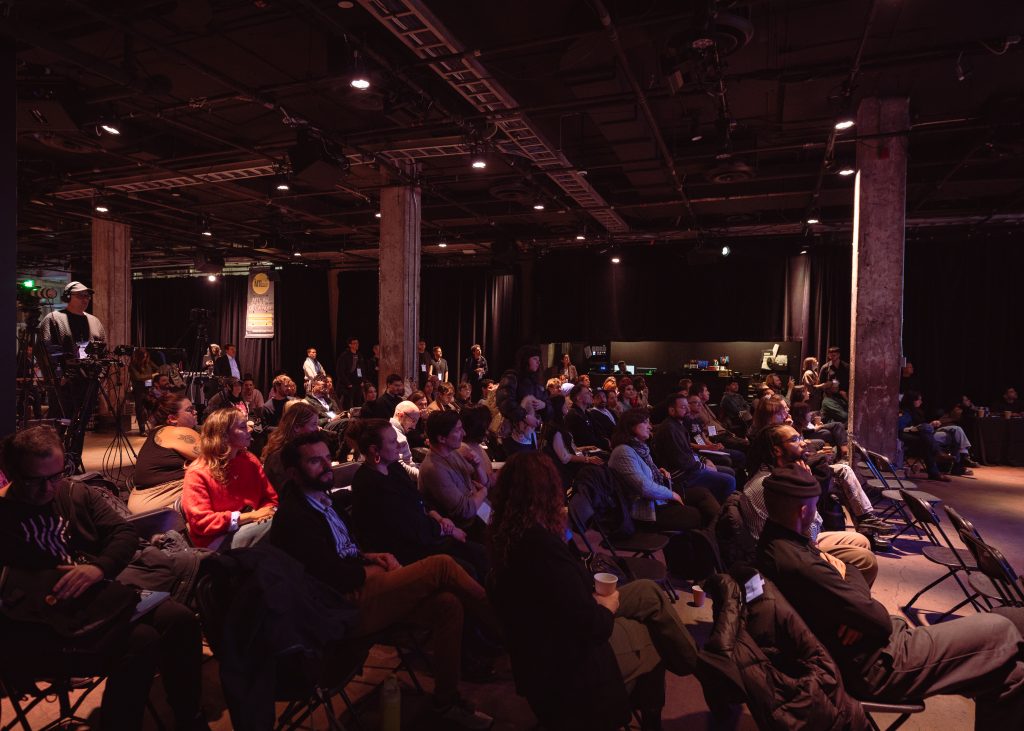
The second panel shifted the lens toward Montréal’s underground scenes, represented by collectives emerging from afro-centred, Latin, queer and electronic communities. These groups described ecosystems built through self-organization, accessible pricing, multilingual communication and an insistence on safe and welcoming environments. They also pointed to recurring structural obstacles: lack of affordable mid-sized venues, suspicion from some landlords, stigmas around raves, and reliance on social-media algorithms. Yet they continue to innovate through alternative promotional strategies, creative scenography and long-term relationships with supportive venues. Their contribution to Montréal’s cultural fabric is immense, but their foundations remain precarious.
After lunch, a series of presentations re-situated the day within the broader landscape of nightlife governance. MTL 24/24 provided an overview of the Nightlife Policy and the growing coordination between the City, boroughs, OBNLs, nightlife operators and community organizations. The introduction of the renewed Conseil de Nuit, now tasked with running the Échanges nocturnes, underscored the importance of creating a structured civic channel for the voices of nighttime workers, users and communities. The presentation of the upcoming Maison de la Nuit outlined a future physical hub for documentation, mediation, exhibitions and experimentation—a place designed to anchor the city’s long-term approach to governance, research and public engagement around the night.
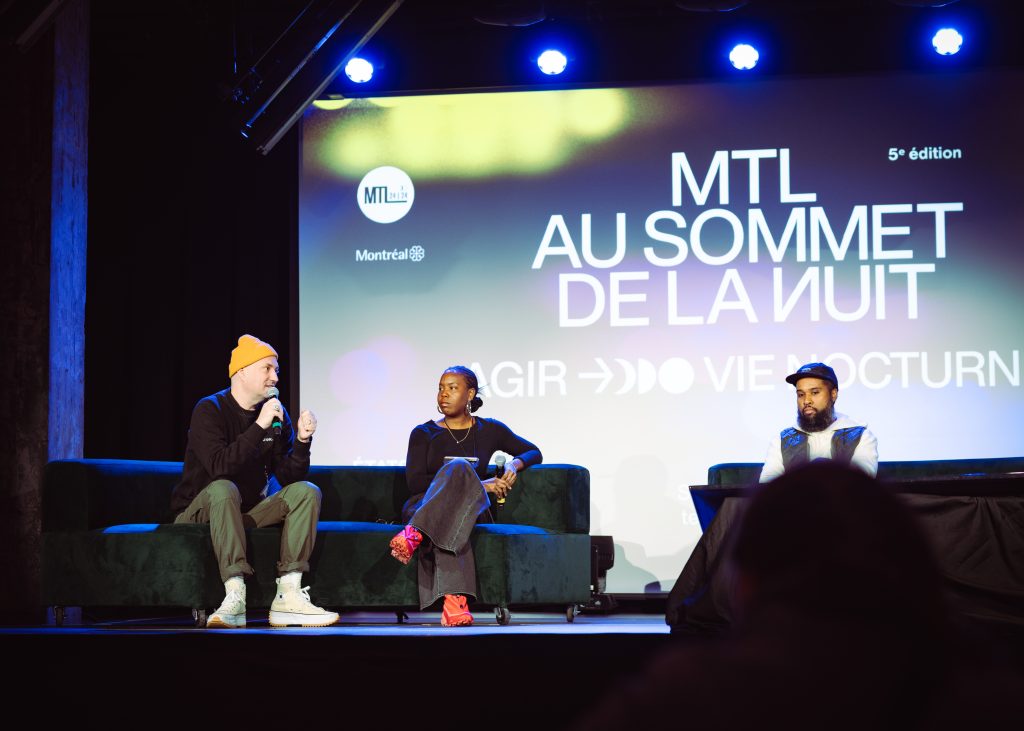
A panel on operating nightlife venues brought the discussion down to the most concrete level: soundproofing costs, zoning rules, licensing requirements, vacant spaces, housing pressure and the uneven accessibility of municipal programs. Venue operators described the heavy financial and administrative burdens they face, while municipal staff acknowledged the need for better transparency, improved complaint-handling practices, and clearer support measures for small cultural businesses. The conversation also reflected broader shifts in audience behaviour: more interest in non-alcoholic options, an emphasis on experiential value rather than consumption, and the growing importance of the “agent of change” principle in urban planning.
The presentation of the city’s nightlife safety initiative, the Veilleurs, offered a different perspective on nighttime security. Instead of relying solely on police intervention, the project emphasizes prevention, mediation and care through multidisciplinary teams embedded in pedestrian zones and nightlife districts. The approach reframes safety as a shared responsibility rather than a punitive system.
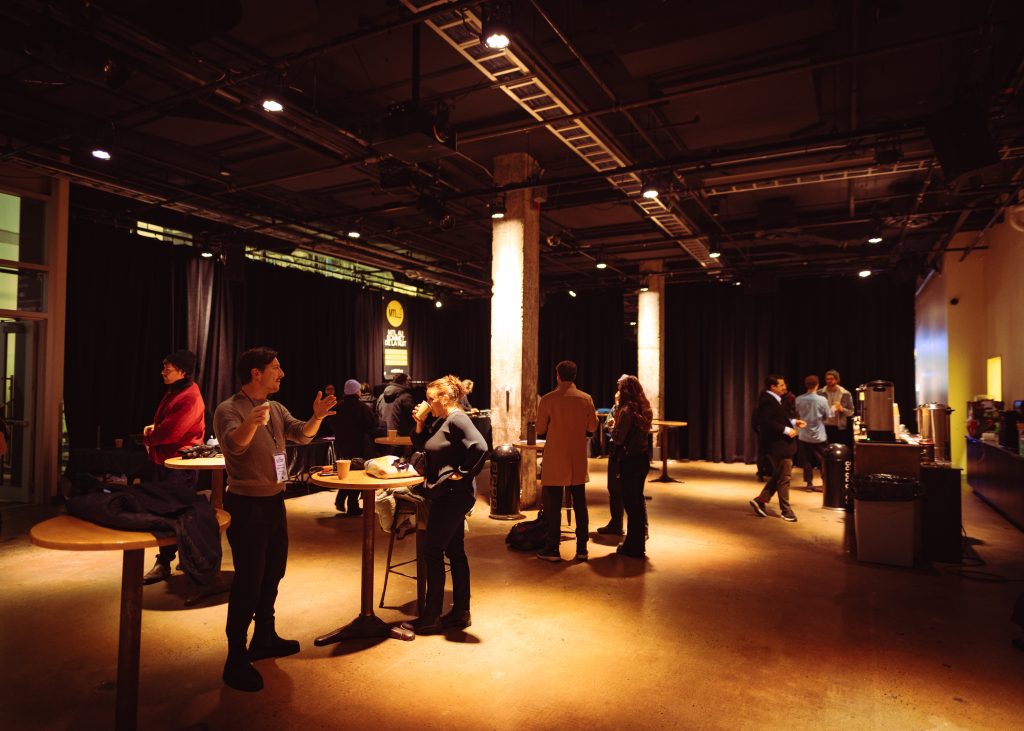
The final panel handed the mic to artists and cultural workers. They discussed navigating rights management, building sustainable careers, balancing creative work with online visibility, and developing long-term artistic identities in an oversaturated landscape. The message that emerged was consistent: artists increasingly need to understand their work as an asset, build supportive communities, and cultivate authenticity—both on and offline.
Taken together, the day’s exchanges created a common vocabulary across sectors that rarely speak to one another directly: underground collectives, venue operators, artists, municipal services, researchers and residents. The 2025 edition confirmed the Sommet’s role as a key annual checkpoint—one that helps ground the Nightlife Policy in lived reality and keeps Montréal’s nocturnal ecosystem evolving through continuous dialogue. Montréal’s nightlife remains fragile in many ways, but it is now better articulated, better supported and more collectively defended than ever.